Richardson’s annual research reveals a panoramic view of the changes confronting sales professionals today.




Richardson’s annual research reveals a panoramic view of the changes confronting sales professionals today.

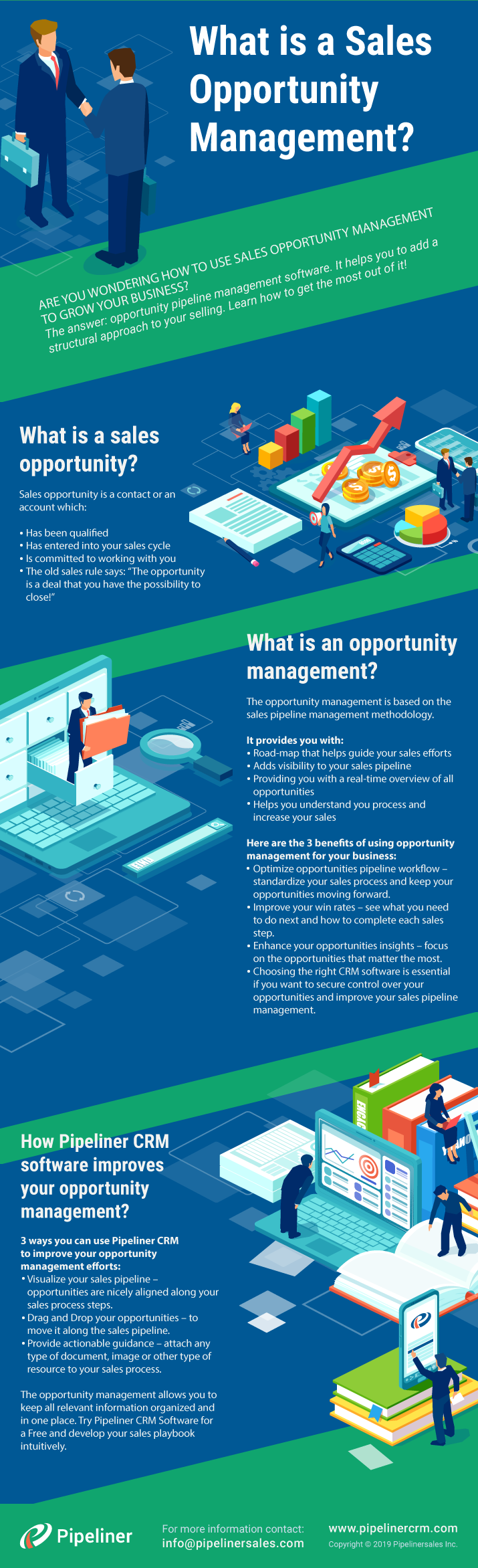
Sales opportunity management is absolutely essential for your business and its growth. Learn about sales opportunities, 3 benefits of using opportunity management, and how Coevera makes all of this easier to visualize and track.

With the increase in online shopping comes an increase in customer expectations. Shipping times are becoming shorter, technology is becoming smarter, and customer service is becoming more important. Companies that sell online have to keep up with this demand or be left behind.
By 2040, it’s estimated that 95% of purchases will be made online. If you’re a retailer, understanding the changing landscape of ecommerce will help you survive and thrive in the future. By having a few important statistics in your back pocket, you can set yourself up to make smart strategies from social media marketing to customer service satisfaction.
Not sure where to start? This infographic covers everything you need to know about the ecommerce landscape in 2019.



There are many reasons customers may be (virtually) walking away from your e-commerce site. Some of these reasons include:

Luckily, Matt Wollersheim has come up with several solutions to help customers stick around!
For more information on e-commerce and how to help your e-commerce business succeed, check out important SalesPOP! content such as Tech and Ecommerce Alliance to Marketing and Sales, Applying the AIDAS Theory to an ECommerce Website and Streamlining your eCommerce Business: 5 Tips for Entrepreneurs.
Today there are shifts and selling, and shifts in buying. For example, buyers expect to get more from businesses they buy from. Sellers find that buyers are more difficult to reach, and take longer to commit. Buyers tend to avoid talking to sellers until they’ve done their own research online. Sellers wonder what buyers really need and want from them. And the list goes on. But, the bottom line is that buyers want an awesome, connecting experience, and an excellent solution to their problem. And sellers want to help others solve their problems, and make a living doing what they love.
It can be important to understand these, and various other shifts in selling and buying. But, there are some ways that you can get into the head of your buyer and understand how to use that information to make extraordinary sales.
Explore this powerful infographic and learn the benefits when you stop selling and start leading.

Check out some related articles about buyer behavior, such as Amazing New Study on Buyer Behavior, When Do You Lose Customer Trust? Sales Ethics: 3 Steps To Overcome Buyer Distrust, and Sales Styles: Buyer Criteria Dictates the Winner.

Sales managers have a very important, yet ever-changing, job. Along with the B2B buying process, responsibilities of sales managers are constantly shifting. The sales world as a whole is changing, too. This can be difficult to keep up with. In order for sales managers to truly thrive and succeed in this constantly evolving environment, it’s important to think differently.
Territories, customers, and products become a financial portfolio that gets regularly invested in. The people, money, and allocation of time and resources need to be reviewed and reallocated in order to ensure everything works like a well-oiled machine, and resources are being used most effectively. Sellers operate differently, and it’s vital to the preservation of a company and a sales staff that sales managers operate differently as well.
Tom Searcy explores key sales manager insights and discusses the most important responsibilities for sales managers.

To learn more about how to keep up with the ever-changing sales managerial world, check out more articles by Tom Searcy, including 7 Key Responsibilities of Sales Managers, and 4 Small Changes For Big Selling Success. SalesPOP! Has a wealth of information and insights on being a sales manager. You can get access to these insights by reading articles such as What Makes a Good Sales Manager Great?, and A Sales Manager’s Recipe: What’s Cooking in 2018?.

Have you heard of the BANT approach? It’s one of many excellent sales strategies that you can use to increase sales. BANT is an acronym for Budget, Authority, Need, and Timing. It has been around for decades, but it isn’t utilized as it should be. Skilled salespeople all over the world use this acronym and pull it out of their toolbox whenever the opportunity arises. It’s also a favorite of sales managers, who often teach the BANT Approach to their sales team. If you’re not familiar with the BANT Approach, now is the perfect time to learn and be able to utilize it.
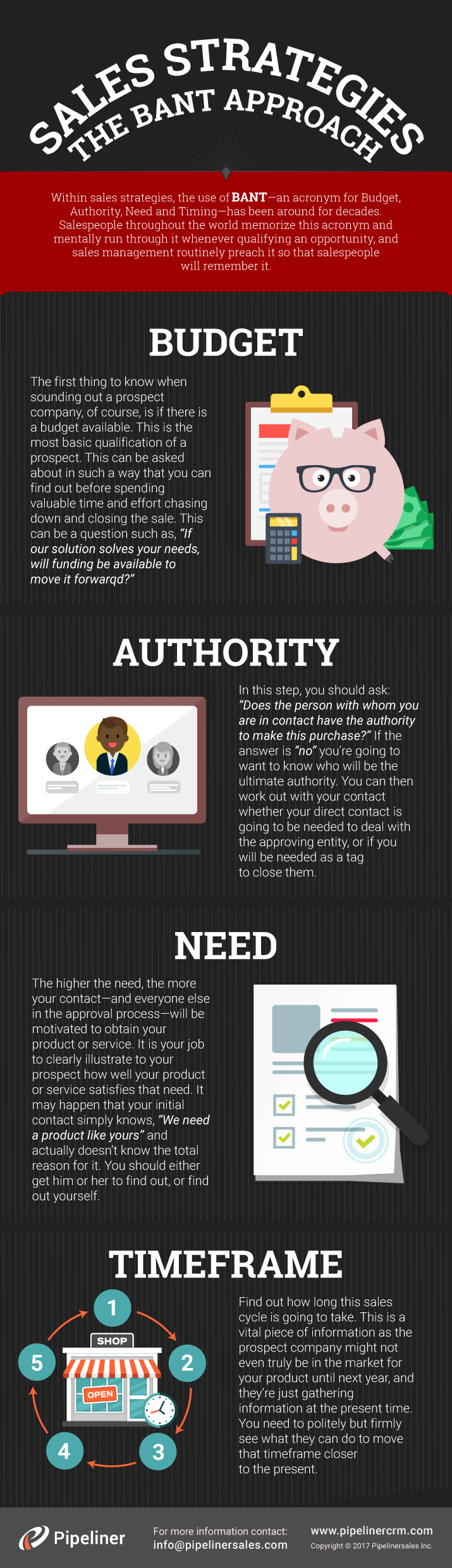
Check out more on the BANT Approach by reading these articles! Sales Strategies and The BANT Approach and Sales Strategies: The BANT Approach.