



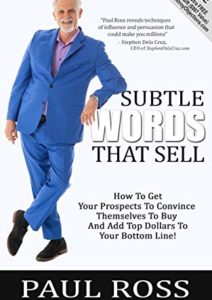
Most sales training gets it backwards. It loads reps with product knowledge, objection scripts, and closing tactics—then wonders why buyers still hesitate. Paul Ross, a sales influence expert with 3 decades in the field, thinks the real action happens in the subconscious mind.
His core argument is disarmingly simple. People don’t decide with spreadsheets. They decide with feelings, then justify those feelings with logic. So if you’re leading with features and pricing, you’ve already lost the emotional window where real decisions get made.
It Starts Before You Even Pitch
Ross talks about something he calls the “buying state”—a mental state in which a prospect feels focused, emotionally connected, and confident in their own judgment. His whole approach is about engineering that state before anything else happens.
The language shift is subtle but significant. Instead of opening with agenda-setting or product talk, try something like: “Before we explore this together, I’d love to hear what’s on your mind.” Words like “explore” and “together” do quite a bit of psychological work. They signal safety, partnership, and no pressure—which is exactly what a resistant buyer needs to hear.
What to Do When Someone Pushes Back
Here’s where most reps go wrong: they treat objections as arguments to win. Ross treats them as patterns to interrupt.
When someone says “I need more time,” the instinct is to push back or pile on more information. His approach? Ask a question that cracks the pattern open—something like, “Have you ever delayed a decision and later wished you hadn’t?” It’s not combative. It just quietly invites them to think differently.
He also champions something counterintuitive: silence. Not awkward silence, but deliberate space. When you stop rushing to fill every pause, prospects often fill it themselves—usually with whatever concern was actually holding them back.
The Mindset No One Talks About
Ross is equally direct about the inner game. Needy enthusiasm, he argues, is a sale-killer. Buyers can feel desperation, and it triggers resistance. The reps who consistently outperform aren’t the most enthusiastic—they’re the calmest.
His advice: detach from the outcome. Focus on guiding the conversation, not controlling the close. It sounds paradoxical, but the less you need the sale, the more naturally it tends to come.
Who This Actually Works For
Ross is refreshingly honest about the fact that these techniques aren’t a shortcut. They’re best suited for salespeople who’ve already mastered the fundamentals and are hitting a ceiling—people willing to unlearn habits and invest in a genuinely different approach.
As AI takes over more transactional parts of the sales process, the human ability to create real emotional resonance becomes the differentiator. That’s not a soft skill. It’s a competitive edge.
The takeaway is simple, even if the execution isn’t: stop selling the product. Start selling the feeling of having made a great decision.
Our Host
John is the Amazon bestselling author of Winning the Battle for Sales: Lessons on Closing Every Deal from the World’s Greatest Military Victories and Social Upheaval: How to Win at Social Selling. A globally acknowledged Sales & Marketing thought leader, speaker, and strategist, he has conducted over 1500 video interviews of thought leaders for Sales POP! online sales magazine & YouTube Channel and for audio podcast channels where Sales POP! is rated in the top 2% of most popular shows out of 3,320,580 podcasts globally, ranked by Listen Score. He is CSMO at Pipeliner CRM. In his spare time, John is an avid Martial Artist.




Comments