


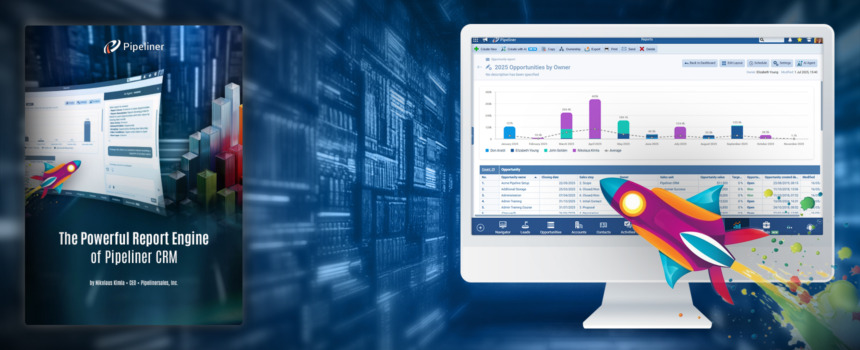
The eBook was originally published under the Pipeliner CRM name. Pipeliner is now Coevera — same company, evolved identity.
The Power of Coevera’s Report Engine: Turning Data into Decisions
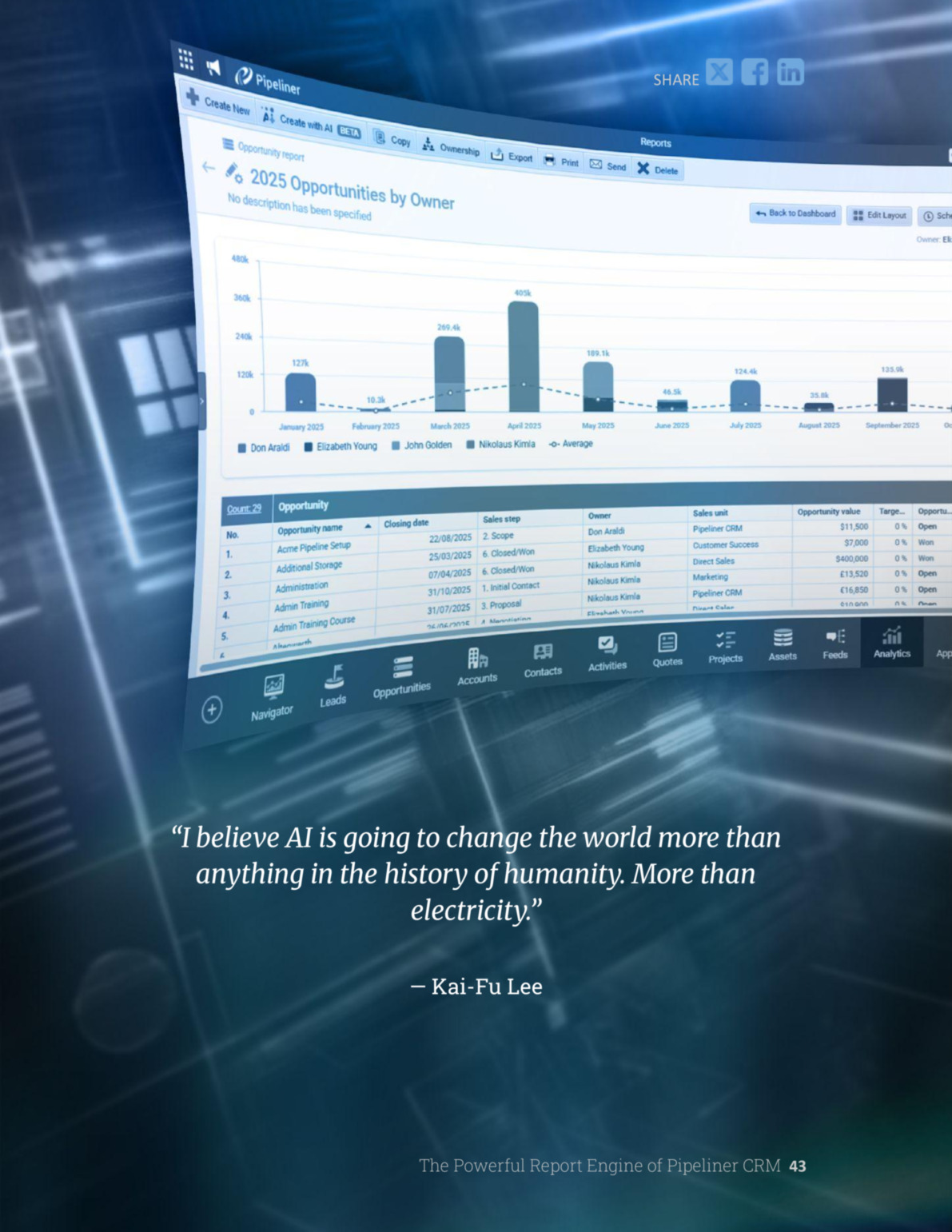
The Powerful Report Engine of Coevera, Nikolaus Kimla argues that Coevera offers what is likely the most flexible, visual, and powerful Reporting Engine in the CRM market. He contends that traditional CRM reporting can be time-consuming and often requires multiple people, including the IT department, to create a single report. Coevera set out to revolutionize report creation with a focus on three core principles: complete data transparency, entirely visual reports, and ease of creation and automation. This approach gives users instant, dynamic visualization of their data, which is essential for making informed decisions.
But what exactly makes Coevera’s reporting so different?
Reporting Engine Features
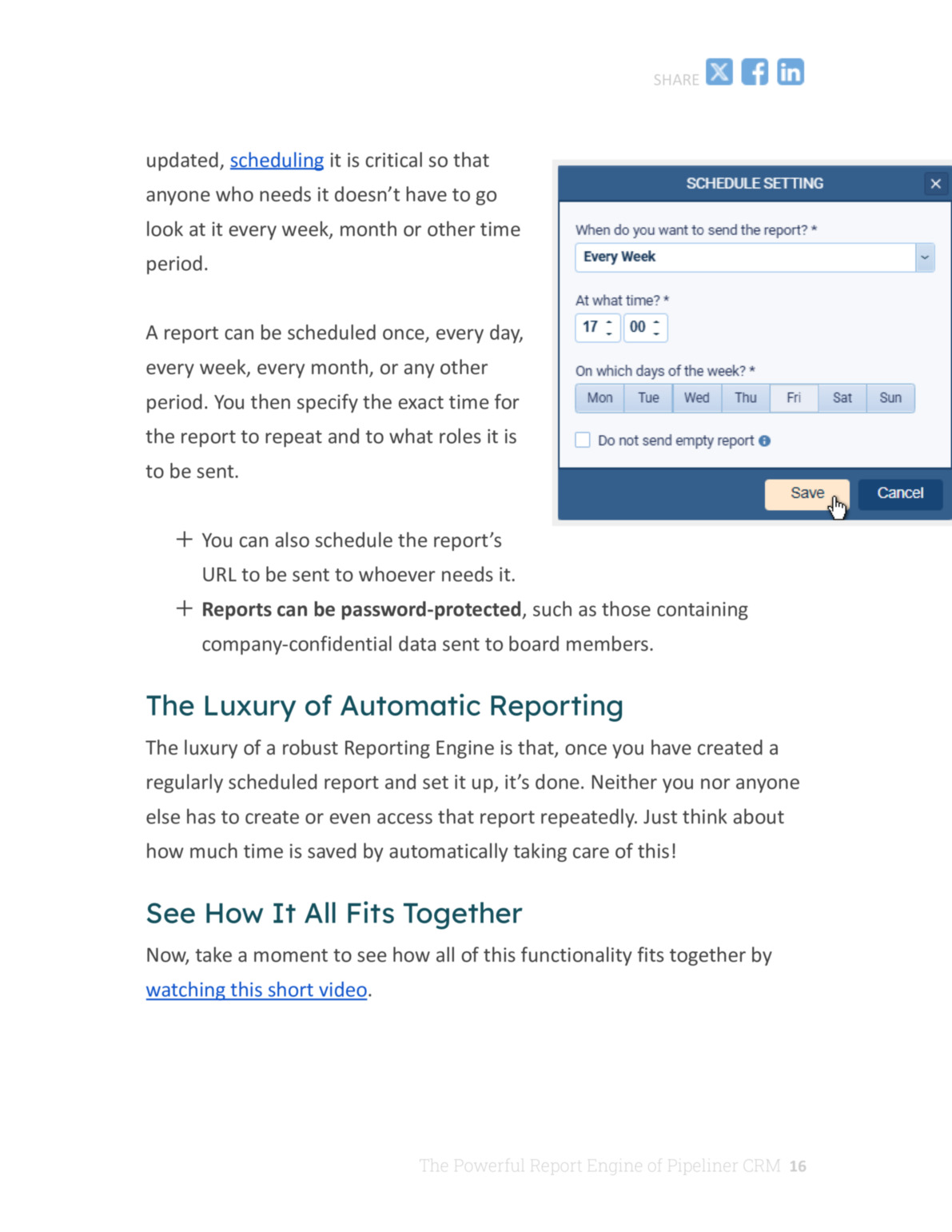
Coevera’s user-friendly design allows you to create reports from any of its entities—such as Accounts, Contacts, or Opportunities—marking a significant departure from other CRM systems. The “Power Panel” is a central feature that allows you to easily modify report views, set access permissions (private, public, or custom), and apply filters. Coevera also offers a wide range of chart visualizations, including line graphs, bar charts, pie charts, and stacked bar charts, to make data instantly understandable. Another powerful feature is “Report Scheduling,” which automates the regular delivery of reports, saving valuable time.
The New CRM Role in Companies
The ebook explores how Coevera has expanded far beyond a traditional “point solution”. This has created a new, critical role within companies—one responsible for connecting processes across departments, including sales, marketing, finance, and product development. Kimla uses the analogy of Johann Strauss’s “Blue Danube Waltz” to illustrate the ideal of a smooth, seamless flow of data between departments. This new role is vital for a company to survive in today’s competitive environment, and Coevera offers to educate individuals for this position at no cost.
More on Report Engine Features
In this chapter, Kimla dives deeper into advanced reporting functionalities. You’ll learn about the simple process for sharing reports with team members and how to enable or disable editing permissions. A standout feature is “Historical Reporting,” which allows you to analyze historical data, such as opportunity trends over a specific time period, with a unique Sankey visualization. The “Advanced Report” feature is also highlighted for its ability to combine multiple entities and fields, providing a more comprehensive view of your data.
The Vital Importance of Reporting
Reporting is “the most critical function for any CRM system”. Coevera’s reporting is designed to be highly flexible, adapting to the constantly changing needs of a business. This flexibility is the basis for the term “Instant Dynamic Visualization”. Kimla explains the difference between “knowledge” and “information,” arguing that Coevera’s dynamic reporting gives users the knowledge and insight needed to identify problems and make informed decisions. This focus on core issues and problem-solving ultimately leads to greater efficiency and profitability.
The Report Engine AI Agent
The ebook concludes with a look at the future of reporting: artificial intelligence. Coevera has released its first effective AI agent for the Report Engine, making report creation as simple as typing or speaking your instructions. However, Kimla strongly emphasizes that AI is only valid if your data is accurate and clean. This is why Coevera provides a “Duplicate Checker” to ensure meaningful results. The reports generated by the AI agent can be easily integrated into Coevera’s powerful dashboards, providing sales management with a comprehensive overview of the company’s operations.











Comments