




Boosting website sales — without earning your target audience’s trust first — is practically impossible. Not because your web visitors don’t see the value in what you offer. Instead, the factor stopping them from clicking that ‘Buy’ button boils down to uncertainty.
According to consumer behavior research, most shoppers experience uncertainty when faced with new shopping situations. And the reason isn’t necessarily that your offer seems risky. It might just be that they don’t see themselves as sufficiently experienced and knowledgeable to make a purchase decision they won’t regret later on.
Due to this feeling of uncertainty, most buyers consider several purchase-influencing factors before making a final decision. They check whether a solution is of a high-enough quality. They ensure that it provides fair value for money. They examine whether the brand behind the product or service can be trusted to deliver on its promises.
In fact, if you look at the research data published by Edelman in 2025, you’ll discover that 88% of people consider brand trust to be just as important in determining their buying behavior as product quality and price. In other words, turning web visitors into customers hugely depends on your capacity to earn their trust.
So, how do you build brand trust that drives conversions? Let’s examine the top credibility-boosting strategies you can implement today.
Instantly Show Visitors They’re in the Right Place
Confusion is one of the primary factors stopping web visitors from perceiving a brand as credible and dependable. Not necessarily because they see something that makes them doubt an organization’s credibility. The lack of clarity simply creates an environment that isn’t perceived as safe, automatically triggering self-protective behaviors (such as choosing not to convert).
To avoid this from happening in your digital presence, the best thing you can do is lead with trust-building assurance.
Know that you have less than a second to leave a first impression on your web visitors — so make the most of that time:
- Present a brand image that is professional in its aesthetic appeal.
- Create an online presence that is entirely user-centric.
- Clearly communicate the value you offer.
The brands that accomplish this best are those that combine clear messaging with cohesive, appealing visuals, showing (and telling) visitors precisely what they can expect if they choose to purchase.
Sky and Sol, for instance, is a business that makes visitors instantly understand its mission of eliminating toxic ingredients from sunscreen. By stating that its priorities include ingredient purity, luxurious customer experiences, and proven effectiveness, Sky and Sol helps prospects immediately understand what the brand is about and who it serves — a type of clarity that reduces confusion and builds trust in the earliest stages of the sales funnel.
Communicate Trust-Building Value Before Visitors Start Scrolling
One of the biggest obstacles to earning customer trust — particularly in today’s fast-paced world — is that consumers don’t always pay attention to branded messages. Instead, they simply scroll until they chance upon a marketing message that describes something they want.
So, no matter how much you invest in trust marketing, it won’t benefit your bottom line unless you can guarantee that your prospects notice your trust signals and interpret them in a way that builds a positive (and relevant) brand perception.
The best way to reach this goal is to establish brand credibility early in the buyer’s journey — simply because that can help you retain your prospects’ attention long enough to convince them of the attractiveness of your offer. And the best place to do so on your website? The hero section.
According to web user behavior analyses, people spend the majority of their page-viewing time looking at above-the-fold content. In other words, to have prospects notice key information about your brand’s credibility (which will, then, influence their likelihood of converting into customers), you have to show it off in the first screenful of your website — before your visitors start scrolling.
By emphasizing trustworthiness and dependability in the most prominent section of your digital presence, you encourage consumers to associate your brand with these characteristics. Their perception will, inevitably, influence their buying decisions. And the sense of safety will, effectively, make them feel more comfortable spending their hard-earned money with your brand.
So, identify the elements of your offer that are most likely to earn your target audience’s confidence. Then use visual design strategies to highlight them in your prospects’ eyes.
For instance, if you check out the Four Sigmatic homepage, you’ll notice that it highlights several trust-building visual elements. These include a statement that the brand has over 100,000 5-star reviews, the brand’s age (which testifies to its experience and proven dependability for over a decade), and a claim that it has served over 400 million cups of its beverage. The latter positions the business as a well-established brand in its industry, on which consumers can rely for quality products.
Replace Claims with Proof Visitors Can Verify
The thing about earning customer trust is that there’s more than one way to do it.
On the one hand, you can present your audience with claims about your brand’s credibility and hope that there are sufficient to establish your company’s trustworthiness (and drive sales). Or you can not make any trust-based claims and focus, instead, on credibility-building strategies that will make your prospects conclude that your brand is an organization they can trust.
Admittedly, the philosophy of ‘show, don’t tell’ is not always the fastest way to earn customer trust. Nevertheless, it’s often the more effective way to position your brand as credible — particularly in highly sensitive settings or low-trust industries.
For example, if you look at a brand like Mesothelioma.net, you’ll find that it doesn’t attempt to convince web visitors of its credibility. Instead, it presents prospects with in-depth educational resources, which clearly establish the organization’s authority in a high-stakes niche. This approach serves the brand perfectly, as it allows visitors to verify Mesothelioma.net’s credibility without forcing them to take claims at face value.
Make Your Product Easy to Understand at a Glance
Confusion is the enemy of confidence. So, if you want to build brand trust in a way that drives conversions, investing in product understanding is an absolute must.
That’s because humans naturally falter when they don’t feel confident in their decision-making ability. According to research, uncertainty can easily lead to analysis paralysis — a state in which people avoid or put off decisions simply because they don’t know the best way to proceed.
Fortunately, this phenomenon is easily avoidable in conversion-oriented settings — primarily through facilitating product understanding.
Instead of describing your offer in complex (albeit impressive) terms, explore opportunities to use clear, benefit-driven messaging. For instance, brands like Performance Lab actively use language that drives product understanding without requiring shoppers to conduct in-depth research. The approach removes friction, supports movement through the sales funnel, and most importantly, it builds brand trust via the mediating role of customer-centricity.
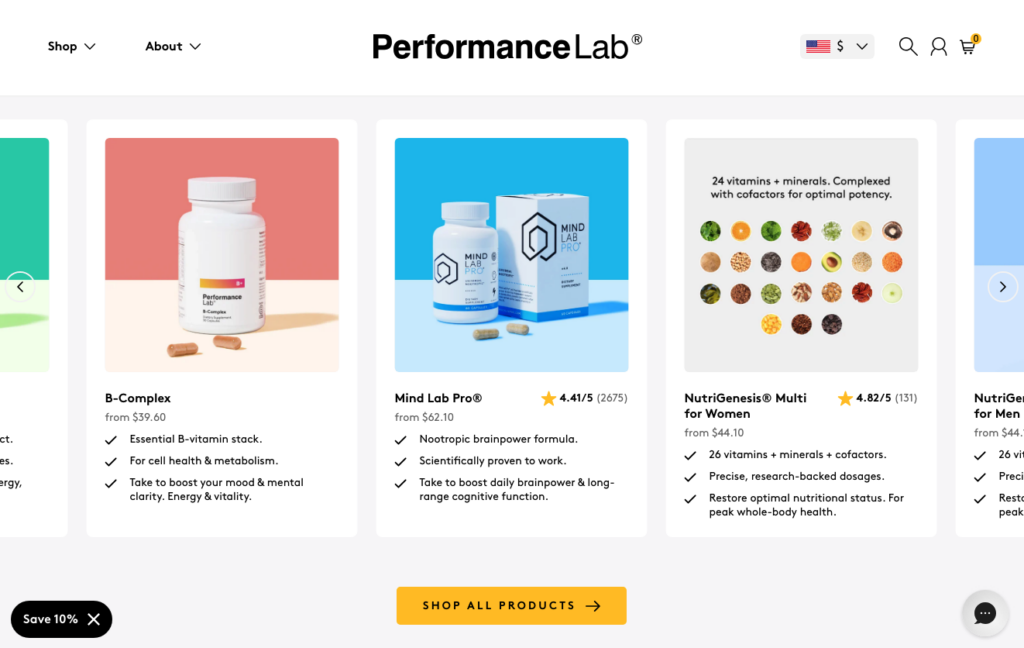
Source: performancelab.com
Eliminate Small UX Gaps That Create Doubt
Although web design and copy play key roles in earning customer trust, they’re not sufficient on their own. In digital settings, web users base their CX expectations (and a brand’s credibility) on the enjoyability of the user experience the brand delivers.
Fast, intuitive, and user-friendly websites win consumer trust. Sites that underperform, however, lose it (potentially irrevocably). Some data even shows that 88% of people won’t return to a website after a bad experience. That’s a strong indicator of just how important UX is for creating a safe and enjoyable digital environment (that drives conversions).
So, what are the primary UX gaps that create doubt and harm brand trust?
In addition to slow load times, confusing navigation, and inaccessibility, it’s also important to ensure consistency across touchpoints, use transparency and trust-oriented microcopy, and prioritize reliable performance.
Additionally, UX design strategies that build trust and drive sales include optimizing readability, minimizing the number of clicks required to complete an action, and designing calls to action that efficiently guide user movement through the buyer’s journey.
Answer Objections Before Visitors Have to Ask
The most common advice for building brand trust and using it to drive sales rests on the premise of proving expertise and showing a positive track record of meeting customer expectations.
However, what deters most shoppers from clicking the ‘Buy’ button isn’t a negative perception of the brand they’re considering. Instead, it’s a series of common objections that subtly erode trust and harm conversion rates.
In fact, survey data from Statista lists the most common reasons for cart abandonment as high extra costs, slow delivery, mandatory account creation, complicated checkout processes, unsatisfactory returns policies, and insufficient payment methods.
Fortunately, all of these conversion killers are easy to overcome — as long as you can anticipate them and address them with trust-inspiring content.
Businesses like Mind Lab Pro proactively address common concerns — like product effectiveness and safety — by integrating reassurance directly into the browsing experience. Such an approach prevents unresolved doubts from harming conversions in the late stages of the sales cycle. More importantly, it builds trust throughout the early phases of the buyer’s journey, building shoppers’ confidence and encouraging them to convert without hesitation.
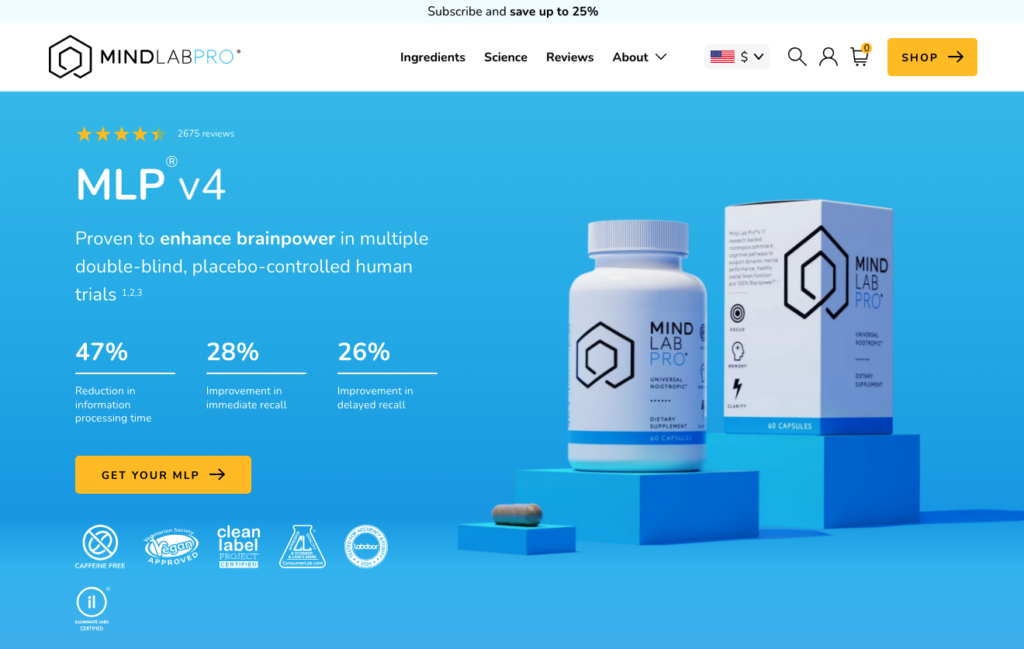
Source: mindlabpro.com
Use Content to Demonstrate Expertise
Lastly, when aiming to convert web visitors into customers by building trust, it’s crucial to understand that consumers don’t respond well to sales pressure. Instead, they often feel alienated by it. It can even make them lose trust in a brand — especially if they feel they won’t get quality service post-purchase.
Fortunately, you can avoid this common trust and conversion obstacle by actively eliminating sales pressure from your digital presence.
By creating a website that focuses on educating and helping your target audience, you won’t just build a positive and trust-inspiring brand image. Much more importantly, you’ll create a setting in which your web visitors will actively form a brand image that rests on knowledgeability and dependability. And that is far more likely to make them want to convert than attractive offers.
With this in mind, explore opportunities to publish content that establishes authority, helps prospects, and provides value. It’s what brands like Spotminders use to build brand trust, employing a subtle approach to elevate consumer confidence and warm leads for conversion.
Final Thoughts
When aiming to earn customer trust and boost conversion rates, the best approach is to always prioritize your target audience’s needs.
Use clarity to show what your customers can expect from your brand; establish a high level of product understanding to reduce uncertainty; eliminate user experience gaps that could slow the conversion process; and be generous with your knowledge and expertise. Furthermore, be intentional with how you use trust-building elements (whether those include claims or proof), and aim to remove your prospects’ objections before they arise.
By following these tips, you’re guaranteed to achieve positive results, and not just in terms of sales. You’re bound to also see an improvement in your brand’s reputation, which is a powerful sales engine of its own.




Comments