

Sales POP - Purveyors of Propserity
CRM Has Failed in the Past. Here’s What We’re Doing About It

CRM Has Failed in the Past. Here’s What We’re Doing About It

As we’ve covered in the first 2 blogs in this series—Will It Now Succeed? and What Should a CRM Really Be Today?—no traditional CRM application has truly empowered salespeople.

Interestingly, we brought Coevera into the marketplace at a time when the market was actually overrun with CRM applications. One could certainly ask, with some justification, why we did this. For the answer, I turn to Peter Thiel from his great book Zero to One: Notes on Startups, or How to Build the Future:

It’s much better to be the last mover—that is, to make the last great development in a specific market and enjoy years or even decades of monopoly profits. The way to do that is to dominate a small niche and scale up from there, toward your ambitious long-term vision.

I picked the CRM arena because, at the time when I was looking for my next major software development, I kept hearing one phrase repeated over and over by salespeople: “CRM sucks.”

If you were in a small town and local citizens kept saying that the “restaurant food sucked,” and if you were an entrepreneur, you’d most likely open a restaurant that people would like. In a similar fashion, I thought that if a majority of the CRM products out there were not delivering what people truly needed and wanted, there was certainly room for one that did. I set out to develop that product.

Finding the Right Approach

In terms of making CRM easier to use, many developers were (and some still are) following the trend of making data entry easier, since salespeople have been complaining about data entry. As important this approach is and should be, I think data entry is only the symptom of a deeper complication, and only a partial solution. The real issue is that CRM does nothing to assist the salesperson (and little to assist the sales manager) in sales, once all that data has been entered.

What was needed from a CRM product manager was to really figure out what CRM users were actually doing, and how they could best be assisted in getting it done. Or put another way, how we could assist CRM users to work more effectively and efficiently in an ever-changing environment. Just from viewing this crucial need, we can see that most CRM systems were created from a developer and not a user point of view. Working from the user viewpoint is but one of Coevera’s radical departures from tradition.

We’re currently living in a world that is constantly moving and shifting, with areas that will never be the same. Overlapping this is the digital world, which is regularly bringing new technologies. In all of this we need a highly effective CRM (although as I pointed out in the last blog that term has already been exceeded as we’re accomplishing much more than “customer relationship management.”).

Such a system must be incredibly flexible, and rapidly and easily adoptable. If not, then you regularly miss the opportunities that pass by you like waves—from customers, from competitors, from the market, from new industries and even from your own product development.

Cutting Out the Middlemen

As we’ve seen with traditional CRM applications, when you have a very static and complex system, you need a lot of middlemen. This has been no more apparent than with the mega-publishers such as Microsoft and Oracle—whole companies have made millions from being CRM consultants in between these companies and their clients.

A system such as ours cuts out such middlemen through greatly improved technology, but also through the core concept of our architecture. We have deliberately developed Coevera to be understandable, adaptable and customizable by anyone. On the one hand cutting out middlemen costs people jobs—but on the other hand it creates new ones, and saves companies millions in the bargain.

The Coevera Concept

So given everything that had come before, and the fact that most users thought “CRM sucked,” we knew we had to start fresh.

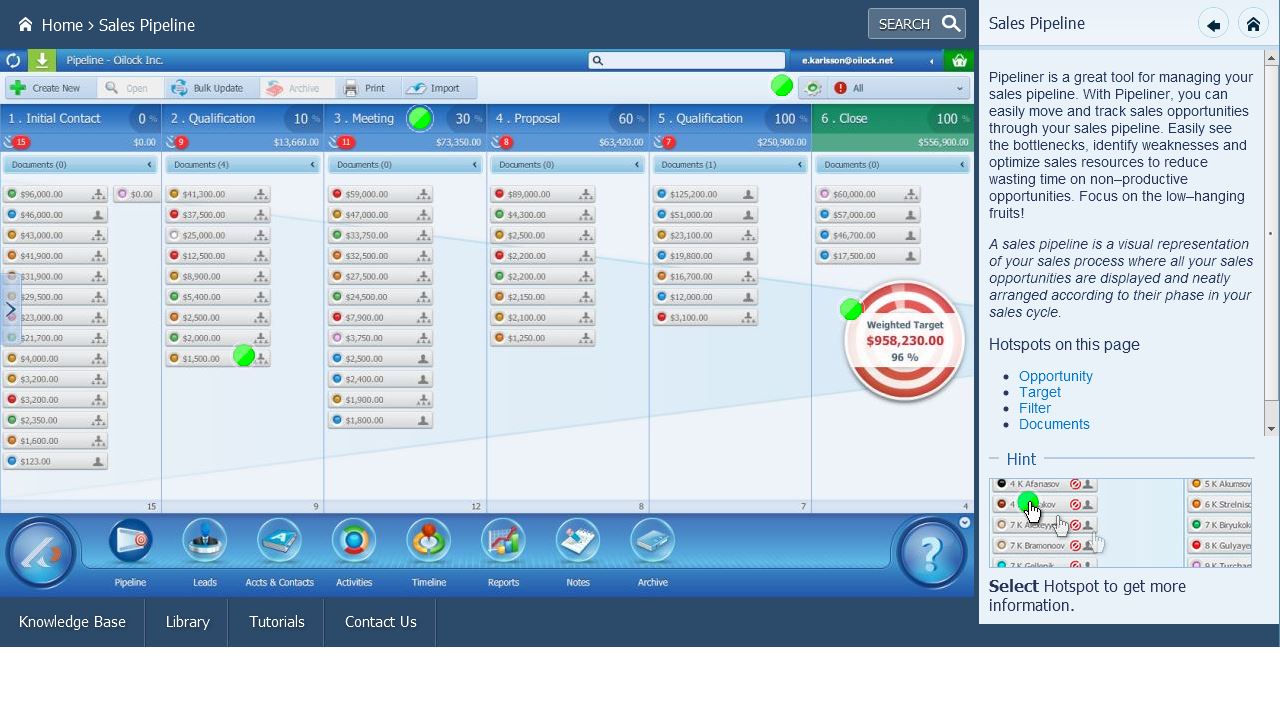
The very basic idea came from an old IBM war room concept. This concept dictated that you had a board up in front of the room, and on the right-hand side of the board was the target. Coevera reflects this concept utilizing brand new forms of technology and visualization.

Then I realized that if we were going to develop a CRM solution that users actually used, we would have to, in some way, make it enjoyable and perhaps even fun. Digital gaming had exploded and had become the biggest market on the planet—everyone was into it. I wondered why some elements of games could not also be brought into a business application, which was traditionally flat and boring. For that reason we made Coevera highly visual and even brought “gamification” elements into it.

Horizontal Processes

Because society has become so digital, only companies that have made that same transition will survive into the future. Beyond that, it is crucial that in the digital world every business must have a process in order to survive.

We knew from the beginning that every company had their own process and that no two were alike. For that reason we developed Coevera to be instantly customizable to a company’s exact sales process.

But we also have observed that, within a company, different areas of the company or different departments have their own processes—such as product sales, service sales, after-sales, pre-sales, and lead management. Hence we have made it possible for a company to implement as many processes as they need, within our CRM solution. And we’re actually the only CRM to do this two different ways—through our main pipeline view, and also through our unique bubble-chart 3D timeline. The lack of multiple processes is one of the reasons that traditional CRM applications have not been successful in the past.

These processes are the horizontal layer—each process proceeding to its own dynamic target on the right.

Because not everyone will need the same view of a pipeline—and some, like sales managers, will need a multitude of views—users can rapidly develop profiles through which processes can be viewed in totally unique ways. These profiles can be saved for repeated use. This approach is yet another Coevera-only benefit, an application of the concept of working with and leading teams.

Vertical Process Steps

But when this development was done, we thought that it wasn’t quite enough: What were users doing vertically in each step of a process? In other words, what actions were being taken to accomplish that single process step?

We made all of the tasks and activities required to complete a process step totally visual, and of course completely customizable. They can even be made mandatory so that no opportunity can be moved into the next process step unless certain tasks or activities are completed. And as part of our overall approach, we implemented a form of gamification into tasks and activities, knowing that salespeople like to play, and can use a playful push for reaching their targets.

Online…and Offline

Another observation we made, especially when Cloud applications began proliferating, was that not everyone had Internet access all the time, everywhere. This is still true…yet salespeople and others using Coevera must continue to do their jobs, online or off. For that reason of Coevera has the unique functionality of having the entire application available whether or not the user is online. The online and offline versions are immediately synchronized when Internet access is once again available.

Heart and Soul

All of the above is the core, the heart, the soul of what Coevera is and does. Everything else has been added on to these core concepts:

• visualization of the horizontal process in multiple pipelines
• steered by profiles to the target
• always having the “war-room” view so that you’re always alert to where you’re standing
• in the vertical actions of a single stage, you always know what you have to go through the seller’s activities and the buyer’s actions.

Next: How Coevera helps assist and create a whole new model of salesperson.

Find out for yourself why Coevera is continuously praised as the most visual, the most flexible and the most user-friendly. Get your free trial of Coevera now.

CRM Has Failed in the Past. What Should a CRM Really Be Today?

CRM Has Failed in the Past. What Should a CRM Really Be Today?

In the last blog in this series, I discussed the serious shortcomings of CRM applications in the past. There were two major reasons for this—one being the technology not being up to par, and the other being that the user was completely left out of the development equation. For that reason a common phrase about CRM became popular with users: “CRM sucks.”

A prime reason for user complaints was the amount of data entry that was required from users, especially salespeople—without any actual assistance and help back to them from the CRM solution. A cry began to be raised by users for CRM to be simplified and made easier when it came to data entry.

Following Thought Processes

But being easy and simple for data entry is a very short-sided view of CRM. Data entry isn’t the primary issue on which we need to focus, if we’re to really understand what CRM should be, and develop sound CRM applications in the future.

Which leads to the crucial question and the topic for this article: What should CRM be doing for a company?

Despite the “big bang” explosion of the Internet (described in the first blog in this series) that brought about a revolution in data, many CRM solutions (including some of the big ones) are still presenting data in spreadsheet-type—albeit glorified spreadsheet-type—formats. These formats do not at all match up with the ways the Internet and new technology have changed how people are thinking and using technology.

You could say that today technology has become an extension of the mind. People conduct searches for items and data, but the internet has become just as vital when people have questions. For example, one could ask, “When was the American Declaration of Independence written?” and have the answer in seconds. It is no longer necessary to memorize reams of facts.

People are moving out of line-by-line, step-by-step organization of data into a more contextualized approach of, “Where do I find an answer to my question?” CRM solutions have not taken this shift in thinking into account. Hence, CRM applications in the future are going to have to become more intelligent in terms of what they are providing for the user, and how they are providing it.

CRM Provision of Data—and Why

Today a CRM user is totally bombarded by too much information. For that reason, one function of the new breed of CRMs must be as a guide through all the noise. CRM should provide focus to the user into tasks, activities and opportunities on which the user should have attention.

For anyone coming newly into the company, CRM should be something that immediately helps the person dive right in and start their job—with no pain. It should be similar to buying a new car; it’s something that is actually a fairly complex operation, but you can just get in and drive.

For any user type within an organization—whether it be a salesperson, finance personnel, sales development rep, tech support or any others—the information should be right there, immediately available in real time for one purpose and one purpose only: to help the person make sound management decisions.

Well Beyond “CRM”

Today many people actually have an incorrect perspective on management—they think that the first point of management is managing subordinates. Some have forgotten that the first part of management is managing yourself.

If you’re going to do that effectively, you need technology. Today anyone in business cannot deal with the rapidity and complexity of data, and information overload without digital solutions.

The actual solution people need for this management is CRM. But for practical purposes we need a broader term than “CRM”, simply because “management” as addressed by a solution such as Coevera, goes well beyond just “customer relationships.”

For managing oneself, a solution begins with helping address priorities, tasks, needs and issues for the person. Then, the system must provide indications, triggers, notifications and suggestions that are important to the user today, right now. A person has a quota, a job, a set of tasks—what does the person have to do to reach or attain that?

Then, following in sequence of the correct order of management, a person would next have to excel in managing the relationship with their boss. The boss will always have questions about where things are at, what’s coming up, how targets are being met, and so on. Part of a person’s management would have to include how they efficiently handle this relationship.

Next in line come the customers—and beyond customers (still in the realm of sales) you’re also dealing with leads, prospects and repeat customers.

But it doesn’t end there. In a growing company, you have peers, and management of peer relationships is also a management job.

Finally, at the end of the line, comes the part of the job that everyone thinks is the first part: that of managing subordinates.

Helping take care of the entirety of management as pictured above is the future view of CRM (or whatever its expanded version comes to be called). The battle for CRM will be for the solution that effectively accomplishes all of these things.

Next up: The true-life story of the CRM that is meeting the above qualifications head-on.

Instant Intelligence, Visualized.  Get your free trial of Coevera now.

CRM Has Failed in the Past. Will It Now Succeed?

CRM Has Failed in the Past. Will It Now Succeed?

A Failure?

Yes, it’s true. Going back roughly 25 years ago to the original development of CRM and coming forward to fairly recently, it could certainly be said that the first iteration of CRM applications has been a failure. They’ve been costly, incredibly difficult and expensive to implement, and additionally expensive to administrate. These factors comprised the first part of the failure.

The second part of CRM’s failure is that CRM applications, which were developed in a large part to monitor and track sales, were literally forced down users’ (salespeople’s) throats. Nobody bothered to check with salespeople to see what would actually assist them in doing what they were hired to do—make sales. Hence salespeople, when it came to CRM, became little more than glorified data entry clerks. CRM was so complex and unwieldy that sales reps had to resort to their own devices, such as spreadsheets and copious notes, to actually track and control their own sales.

The other major users of CRM, sales managers, met with equally difficult obstacles. Instead of being able to rely on CRM for the purpose of watching over reps’ progress and the progress of opportunities, they instead had to communicate with salespeople—through emails, in sales meetings and direct contact—to be constantly updated on sales progress.

A primary reason for this failure was, the technology to make a truly intuitive, useful CRM just didn’t exist back when development began. Graphical user interfaces were only just coming about, and coding had a long way to go before it would really provide anything approaching user-friendly. Unfortunately many of the platforms—especially from behemoth developers such as Oracle and Microsoft—seemed to be cast in stone, and have stayed with us up until today. And they bring with them many of the same problems they carried when first released.

The Big Bang and the Buyer Revolution

What could be considered to be the very beginning of today’s computing universe—the modern “big bang” if you will—was, of course, the Internet. And as it was with just about everything, the Internet was the real game-changer when it came to CRM.

The primary reason the Internet was such a game-changer for CRM had little to do with the software itself. It actually had everything to do with the way the Internet empowered buyers.

Prior to the Internet, buyers learned just about everything about products and services from the salespeople selling those products and services. Buyers could not totally trust the information they were getting—it was coming directly from salespeople after all—so had to take it with a grain of salt. But alas there were few ways that buyers could compare products and obtain real user data about them.

The Internet totally obliterated that problem. It wasn’t long before product reviews, both professional and amateur, were everywhere. Not only that, there were user forums and, later, social media groups through which buyers could learn all about any product or service they were evaluating—without ever having to contact a sales rep.

We then landed in an environment in which the buyer held the majority of the cards. They had made at least a tentative decision before ever talking to a rep.

In this new environment, salespeople were forced to become experts both in their own product lines and in their industries. When buyers turned to them, they had to provide sound, meaningful and helpful advice about what to purchase—it could no longer be just a sales pitch.

It was then that the clamor over CRM applications, especially from salespeople, reached a fever pitch. Salespeople truly needed an application they could count on, that mirrored their sales processes and help them briskly bring buyers from lead on up through closed sales. CRM had to be something that salespeople could really use, not just something into which they were required to enter mountains of data.

A whole new group of CRM companies heard the cries, and answered the call, some better than others. Suddenly CRM applications needed to become truly useful.

The Technological Drivers

While the buyer revolution drove CRM development from one side, the other side was driven by a most unlikely group of players: the digital natives that thrived in the gaming community. These people, mostly millennials, had come up in a totally visual world, and were now being employed as developers. They took one look at the bland, spreadsheet-like appearance of many applications and laughed out loud. They pointed at the incredible graphics being produced in games and asked, “Why can’t we be doing that for business applications?”

In fact this was one of the factors that brought about Coevera in the first place. While I am not a digital native, I did myself (and my company) the favor of listening to them, and we designed a totally visual CRM solution. It is why digital natives such as Activision Blizzard COO Thomas Tippl says, “Coevera is a slick application.” Prior to these digital natives speaking up, no one would have ever considered referring to a business application as “slick.”

The question now becomes: Will CRM succeed in its new incarnation? Stay tuned as we explore this vitally important topic.

Looking for today’s CRM: Instant Intelligence, Visualized?  Get your free trial of Coevera now.

Highest Rated in Satisfaction for CRM Products for 2015

Highest Rated in Satisfaction for CRM Products for 2015

G2 Crowd, the world’s leading business software review platform, has determined that Coevera is the highest rated in satisfaction for CRM products, based strictly on user reviews. The recognition was stated as part of G2 Crowd’s ‘Best of 2015 User’s Choice Lists.’

“We are very pleased to recieve this rating based on customer reviews,” said Nikolaus Kimla, CEO of Pipeliner Sales, Inc. “We entered this market in the first place because we perceived that salespeople and sales managers were being weighed down by CRM instead of being empowered by it. This latest rating shows that we are indeed achieving our goal.”

Satisfaction with the product is indeed one of Coevera’s top-cited benefits, as stated by customers. “I love the visual structure of it,” said Chris Collier, National Sales Manager for Whole Harvest Foods. “I’ve been in sales my entire life; I’ve never really done anything else. For me it visually portrayed what was going in my mind—and on my cocktail napkins, and backs of receipts, and backs of business cards. It took all of that and put it into a clear picture right there on my laptop, of what I actually was trying to visualize in my head.”

“It’s really the ease of use,” said Eric McDowell, National Sales Manager with S. Sterling Company. “I don’t know how else to put it. It’s very user-friendly the way that you set up an opportunity, add the contacts to the opportunity, and then start managing that opportunity within your activity calendar. Everything ties together very nicely. It’s not cumbersome in the least.”

Since its inception, Coevera has paid strict attention to the needs of users. The product’s tagline—“Instant Intelligence, Visualized”—is reflected in virtually every one of its features, designed to be totally intuitive and visual. It is the one CRM solution that, per reports from customers, salespeople actually enjoy using.

Satisfaction also shows in the company’s success. FY 2015 was ended at an astounding 106% over the previous year–the third year in succession that Coevera has doubled revenue year over year.

Find out why users are so satisfied.  Get your free trial of Coevera now.

Business Processes are Vitally Important—But When Should They Be Developed?

Business Processes are Vitally Important—But When Should They Be Developed?

Yes, business processes are crucial to company operation. A company functions far more efficiently with formalized processes. When a system guides you to the next best action there is much less chance to miss an action or a step, thus loose an opportunity. In fact, when a company has, for example, a defined sales process in place, the win rates tends to exceed 50% for 2/3 of those companies.

When to Develop

So when should you develop business processes? On the surface, it might seem wholly logical to fully think through and evolve entire business processes right at the beginning, when the business is starting up. It’s a bit like “know before you go,” having a plan before you dive in.

You then stick to these processes and utilize them as your business grows. Hopefully your processes were thought through and developed well enough that they work to bring the business to success.

This methodology can be seen today in some CRM applications. As part of CRM implementation, you fully define your sales processes and other applicable business processes (such as lead generation and marketing). You then utilize these fully developed processes going forward.

What could go wrong? Unfortunately, quite a bit. And yes, there is a far better way to go.

A Software Development Analogy

Fully planning out your business processes before you start, and then sticking to them hoping they will work, is a lot like the early Waterfall Development Model used in software development.

The Waterfall Development Model had all the basic planning done right at the beginning. It then flowed downward (like a waterfall) through initiation, analysis, design, construction, testing, production/implementation and maintenance.

More than 12 years ago, we at Coevera realized that the Waterfall model was a wrong concept. 10 years ago we began programming in what is called Scrum Methodology. This is a far more flexible method through which software is developed in iterations. Each iteration is tested, further coded, then incorporated, and so on. With such a method changes can be made to the original idea as needed.

The key is this: as you progress you will discover that there is a better way to do things. If all your planning has been done up front with no allowance for change, then you’re stuck with your original pattern even if it doesn’t really work for you. In programming, this can be a very expensive mistake.

Business Processes and CRM

The same is true for business processes. If everything is planned out up front, with little to no room left for change as you go along, you’re totally ignoring a crucial factor: business is a dynamic operation. It is living, it is changing. And if your processes aren’t designed to do the same, those changes will only cause you problems.

The primary process utilized within a CRM application is the sales process. Any company will have some idea of a sales process before they begin, and will sketch it out. But as they move through time, it will be discovered that there are missing steps in the sales process, as well as better and faster ways of selling. If your sales process within CRM is unchangeable or difficult to change, or if your company is reluctant to change, your sales reps will eventually just ignore that sales process—and eventually CRM.

The same is true for processes within the sales process—activities and tasks that get you through each stage of the sales process—as well as other processes such as marketing and customer maintenance. These must be capable of rapid change on the fly.

Seller and Buyer Interaction

Another factor that a fixed business process doesn’t take into account is that sales is not a 1-way street, but an interaction. A seller will do something, and will require an action from the buyer before the opportunity can move forward. For example, the seller sends the buyer a demo. The buyer should run the demo and provide positive feedback to it before being moved to the next stage of the process.

A sales process must take this interaction into account, and allow and plan for both sides of the activity.

The Coevera Difference

Coevera was developed with dynamic processes in mind. Coevera is instantly adaptable to a company’s sales process—and can be changed within minutes on the fly when the need arises.

The same is true for all tasks and activities within a sales process stage: these are rapidly established and can be changed instantly on the fly as needs arise. These are based both on seller and buyer actions—and both are required for sale to move forward. We are the only CRM solution to take this critical factor into account.

Additionally, Coevera was one of the first CRM solutions to institute multiple pipelines (processes) because we know that companies often require more than one process. All pipelines share a common database so that opportunities can be moved wholly, with all information, from one to the other.

Leading and Lagging Indicators

Coevera also provides both leading and lagging indicators that allow you to constantly evaluate the effectiveness of your processes.

Lagging indicators—such as total sales, number of items sold, gross revenue and the like—show you the final result. Leading indicators, such as leads created, opportunities moved from one stage to the next, and activities accomplished, show you how well you are heading toward the establishment of your lagging indicators.

Being able to constantly monitor and evaluate processes allows a business to make changes immediately when they are needed, as opposed to the end of a sales period (a quarter or a year) when it is too late.

So when should you evolve your processes? Of course they start at the beginning. But in fact they continue to be developed and refined as time goes on. You must be able to change and evolve processes as the needs of your business change and evolve. There is no other way to go.

Find out how Coevera incorporates and empowers your processes.  Get your free trial of Coevera now.
Coevera for Manufacturing

Coevera for Manufacturing

Tiger Coatings Aligns Sales and Marketing and Tames Document Chaos


About Tiger Coatings

Tiger Coatings fabricates powder coatings for a broad variety of applications: automotive, industrial, furniture, electronics, retail, appliances, and many more. A “powder coating” is applied as a free-flowing dry powder applied usually over metal, with numerous advantages over conventional liquid paint, including a hard finish that is more robust.

Tiger Coatings is a global company. The division of the company currently using Coevera for manufacturing covers three industries in North America: architectural, lighting, and agriculture. The champion and power user of Coevera within the company is Manny Mayer, the Architectural, Lighting. and Agriculture Product Manager, who brought Coevera into Tiger Coatings in 2011. There are 60 sales reps in this division on the Coevera system who report to Mayer.

CRM as Management Tool to Align Sales and Marketing

Mayer’s job description is an interesting one. “I literally work in between Sales and Marketing,” he says. “I tell Marketing what we need for these industries, and I tell Sales what opportunities we should go after — then I work with Sales to go after them. I establish contacts, assist with technical specifications, and get the products developed.”

Mayer uses Coevera to track sales in real time. “In my position, the most important thing is constant communication within the sales force,” Mayer comments. “Since I cover Canada through Mexico, you can’t always speak with 60 people and follow up with everything. So what I was really looking for was something like a Facebook feed, where sales reps input information. I have this running all day long, and can see where they go, if there’s any assistance they need, what exactly is discussed, and what our opportunities are. Coevera is real-time, so for me it’s much more relevant than having a report sent in once a week which I have to hover over for the next 3 days to decode.”

Another major issue that Coevera solves for Mayer is that of document management. Tiger Coatings runs an approval process to allow customers to purchase a particular product, and Mayer says that system used to be very chaotic. “I used to literally have a drawer full of paper with the testing that we’ve performed,” Mayer reports. “I need to keep it for many years in case something goes wrong. Now I just take all that testing data and upload it on Coevera. If there’s ever a problem I just go back and look it up.”

Mayer has been very pleased with Coevera’s development over the two years Tiger Coatings has been using it. He is especially happy with the auto-calculating fields in the latest version. He finds Coevera’s visual functionality useful, and he likes the way the visual features improve with each release.

Mayer is also very pleased with how responsive Coevera has been to any technical issues Tiger has encountered. Issues generally have been fixed by the next released version of the product. He points out that would never happen with a vendor such as Microsoft.

The Status Quo Had to Change

Mayer originally began searching for a “CRM for manufacturing” solution due to his frustration with their previous contact management system. The software was not Cloud-based and was therefore installed only locally on sales reps’ laptops. Mayer had no access to these individual installations and therefore no efficient way to track the sales in his territory; he had to rely on weekly written reports from each salesperson.

One major liability was that if a sales rep left the company, the rep would delete the sales data, and there would be no way to regain that information. Not being Cloud-based also meant that each laptop had to be constantly backed up in case of a hard drive crash.

Mayer was also dissatisfied with the user interface and was constantly struggling with it.

Evaluating Coevera

When Mayer went looking for a CRM solution, he brought Coevera in for consideration, and tried it along with other CRM options.

The company was using SAP, so they considered a SAP CRM but it was too expensive for them. They also tried out the latest version of their previous CRM software, but Mayer found that even the latest version didn’t have the functionality they really required.

Another factor that contributed to the decision was that the Coevera sales rep provided a trial version that completely fit their model, including a trial database. “I think that was very helpful,” Mayer says. “It’s one thing to go on a vendor’s website and see some generic database for a business which has nothing to do with us. Our demo was modeled for Tiger.”

The final decision to purchase was made by the company’s VP Sales & Marketing North America, based on the fact that Coevera operated in the Cloud and the fact that the price was right.

From the IT side Coevera was evaluated by Tyler DeHeer, Tiger Coatings’ Network Administrator North America. He needed to answer such questions as: Would the product be stable on their platform? Would their hardware support it? He reports that it was an easy evaluation, aside from having to educate himself on the Adobe AIR platform (on which Coevera is based). From his standpoint the evaluation was simple.

Training and Rollout

The initial training on Coevera was accomplished in a single day. The training was conducted by the Coevera sales rep, who trained the reps as part of their yearly sales meeting. For all but the very technically challenged salespeople, training was and continues to be very easy and takes a day at most.

From the IT side, DeHeer reported that rolling out Coevera was extremely easy. He did have a frustrating issue with the porting of legacy database data, but he blamed that on the way that Act! data was formatted; it was impossible to port. In the end they decided to not even try—they just began with a clean slate.

Easy, Intuitive Administration

In addition to the painless rollout, DeHeer reports that administration of Coevera in its current version, is very easy. “I really appreciate the ability to create roles,” he said. “I can subdivide users by job requirement. If somebody only needs to see accounts and not see opportunities per se, it’s not a problem.”

“We’ve also got other departments, not just Sales, in Coevera at this point, such as people in Customer Support. Coevera accounts are set up for them where they’re only able to view data; they’re not able to change anything and they’re not able to see opportunities—basically reducing the risk that they’re going to mess something up.”

Summing Up

“I would recommend Coevera to others for sure,” Manny says. “A good CRM is essential for any business. For me, I like Coevera the best.”

Coevera Adds 40+ Enhancements, Updates, and Features

Coevera Adds 40+ Enhancements, Updates, and Features

Coevera has another major release this week, with new features, product enhancements, and engineering upgrades to make your Coevera workflow more customized, faster, and more productive.

Here’s what’s happening now at Coevera:

Your New Coevera Calendar

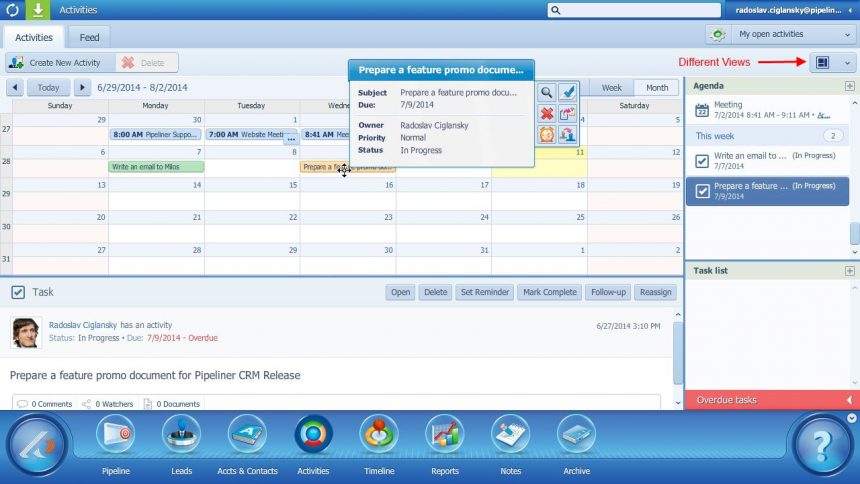
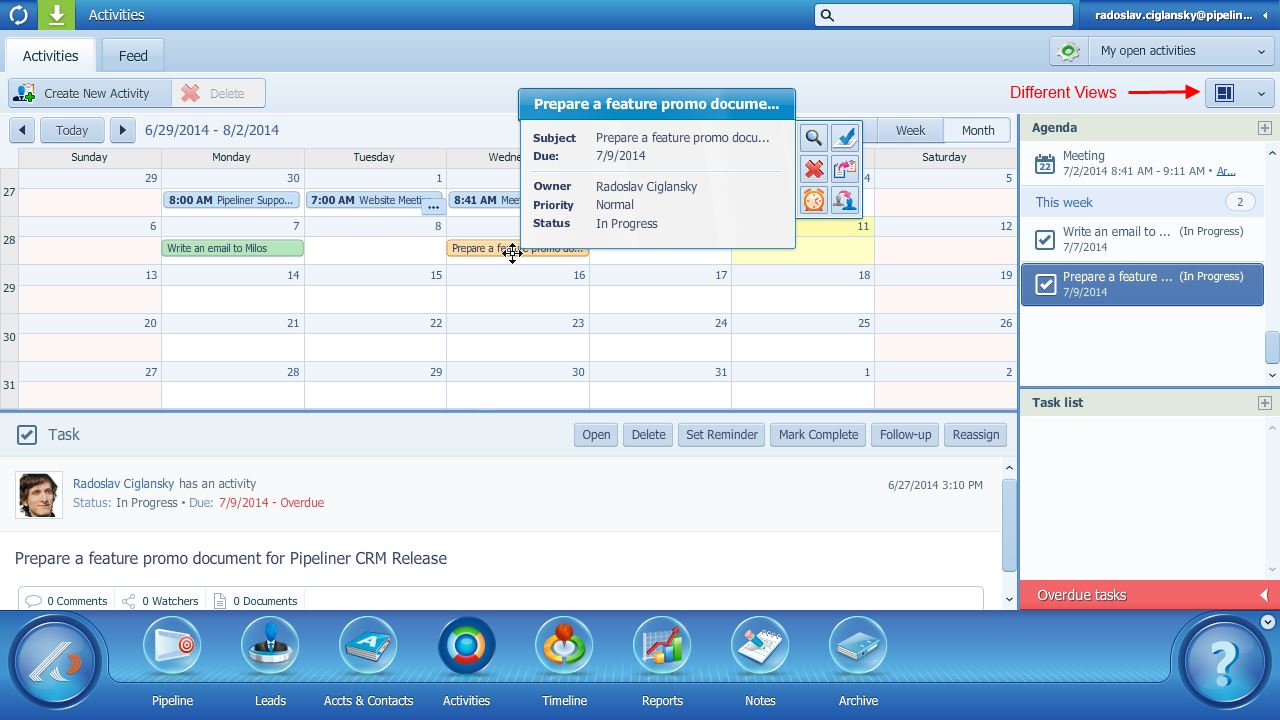
Get exactly the calendar you need! We integrate with both Google and Outlook Calendars. There’s a fresh new calendar look and new calendar features including an agenda view, activity extract, and support for 5 different layouts.

On-Screen Help: Informational “Hotspots”

In-product “explainers” remind you how things work. Simply click on a hotspot and read its related detailed description. A new Search capability too — we show you the hotspots that answer your search request.

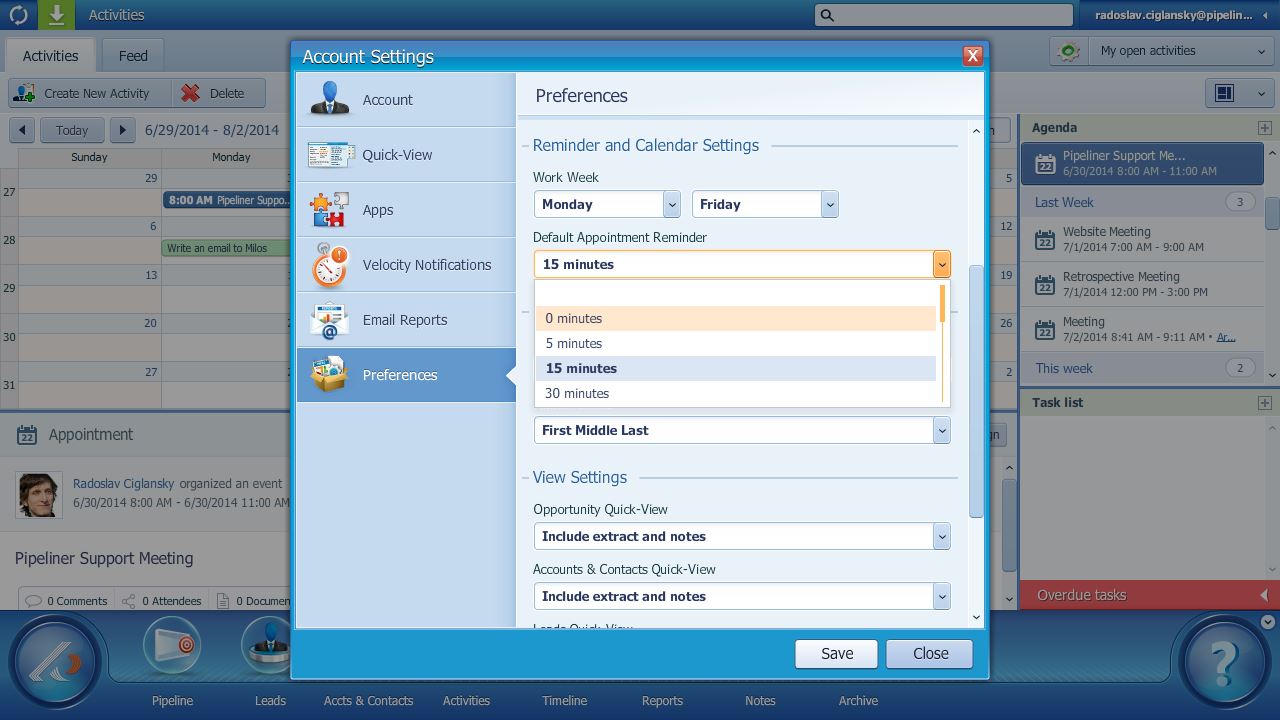
More Options With Reminders

We bring you more usability options for reminders, such as: shared reminders on the appointment level, more “snooze” time, and a “snoozed” reminder.

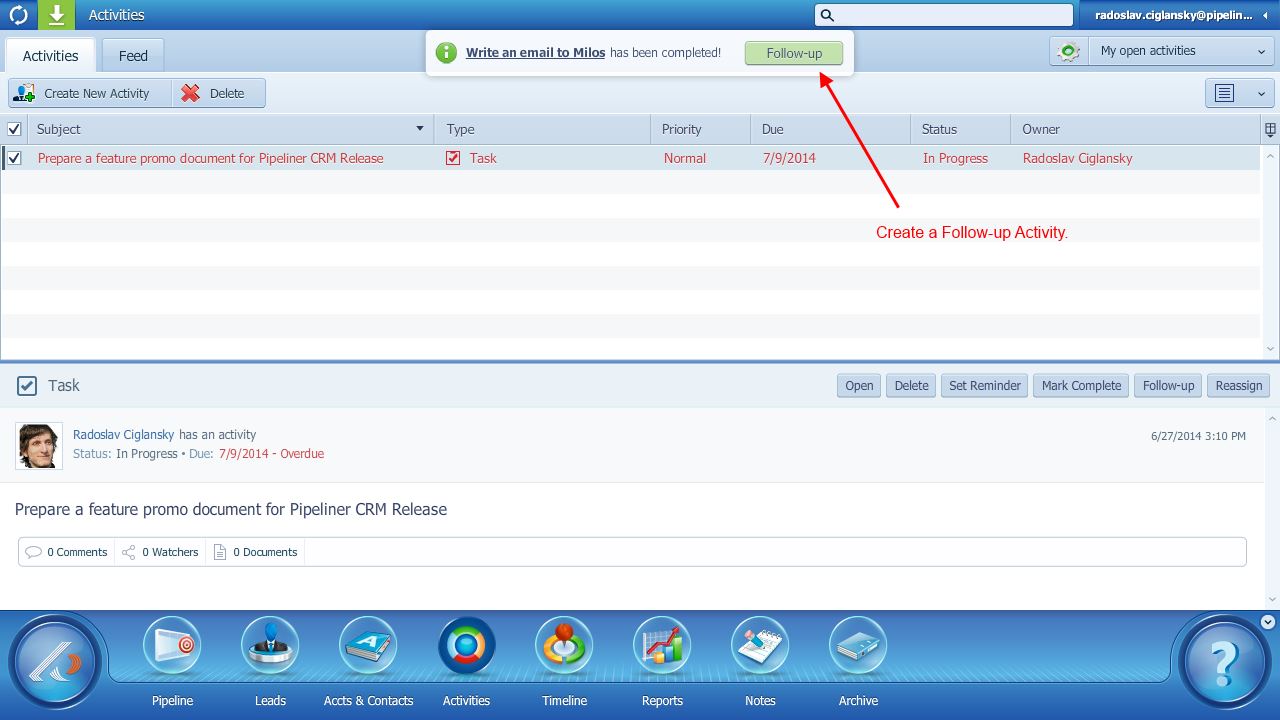
Follow Up with Efficiency

 Easily create follow-up activities for your tasks and meetings.

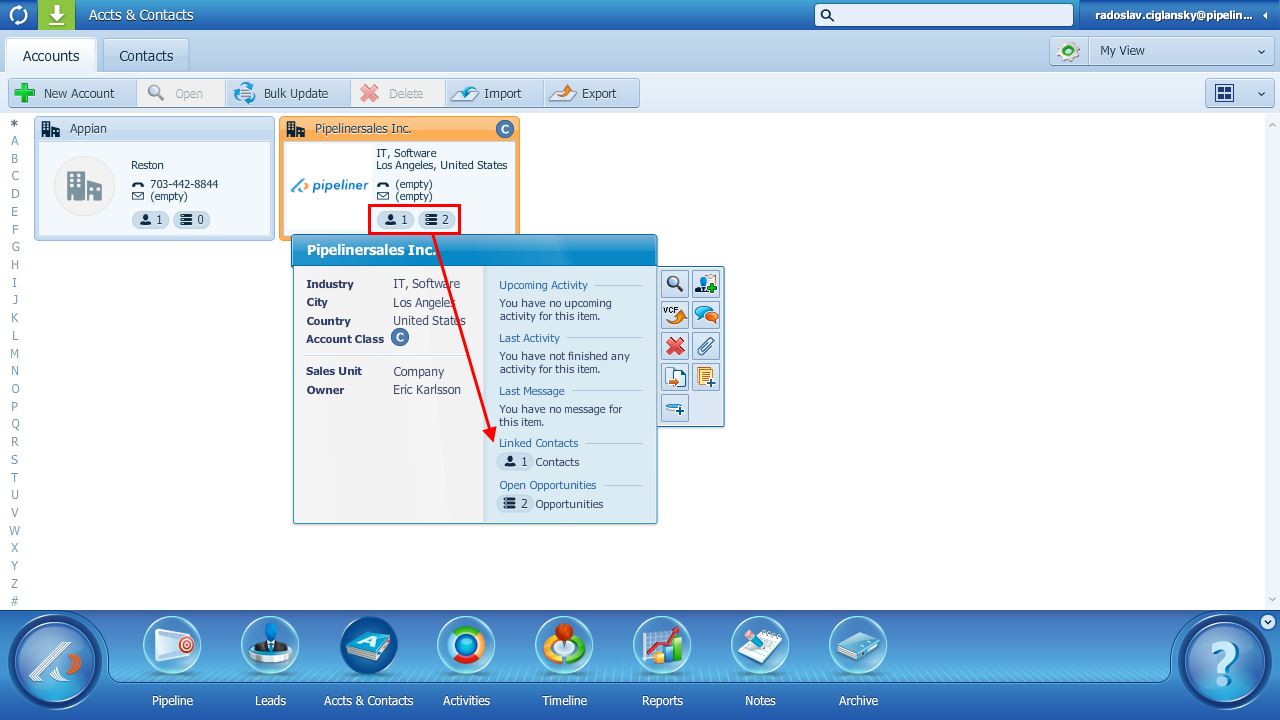
Instant Read on Contact/Account “Value”

We now show you the number of opportunities and contacts associated with every person. The higher the number, the more opportunity exists! Another “at-a-glance” way to show you context around your deals.

Duplication Warning

Entering a new contact? We scan your database and alert you to possible duplicates.

Integrations

With this most recent release, we’ve added Box.com. Box.com is a free service that allows you to store files in the Cloud so you can easily share them with others and access them from anywhere. With the Box for Coevera app, you can attach files to any lead, opportunity, contact, or account. Teams are then able to share and collaborate, and connect best practices to any stage in the sales process.

Our tight Gmail integration connects your Coevera and Gmail accounts. Now you can track your emails and your communication history in Coevera.

We’re also joining the Google Marketplace!

Social Selling Enhancements

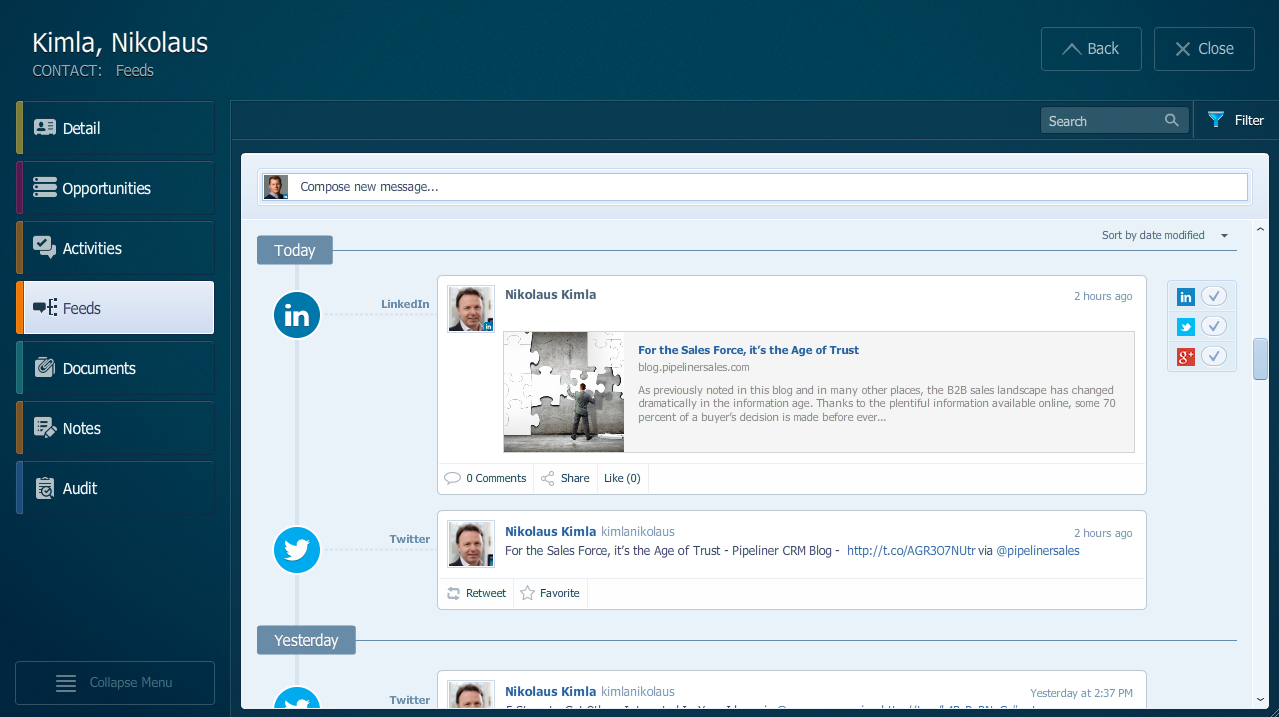
Improvements include: auto-refresh of the feed entries, better quality photos, and social feed now appear within opportunities and leads based on related accounts/contacts.

Built-In Calculator, Custom Views, and Lots More!

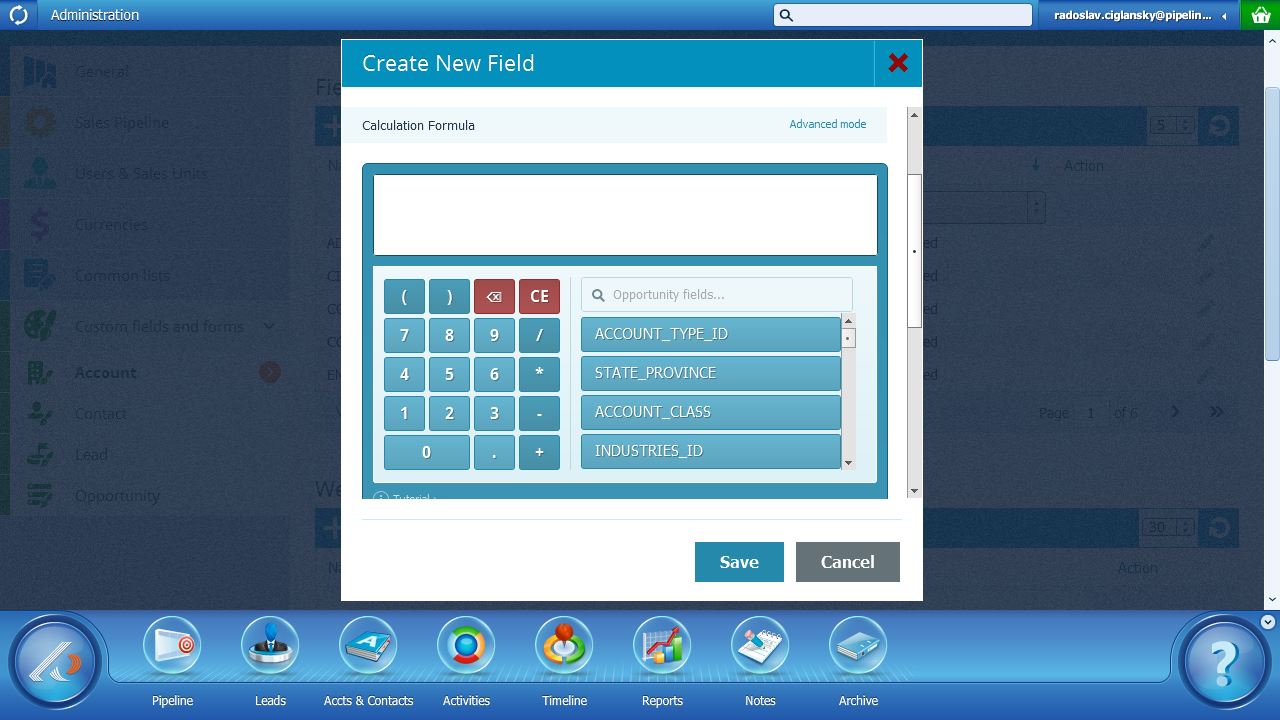
You now have a built-in calculator when you’re building lead scoring fields. The automatic, built-in interface scores the viability of any prospect, lead, or opportunity — plus auto-calculations for use cases like interest and taxes.

You are able to customize columns (up to 4 across) for any view

And more!

  • Export data optimization
  • Calculated fields update
  • Importing efficiencies
  • Purchase Wizard update

You can read more about our recent product updates on our What’s New page. As always, we look forward to hearing your thoughts and feedback on Coevera. We act on your requests, so we like to know how everything is working for you.

Get your free trial of Coevera now.
Coevera Adds More than 20 Features and Product Enhancements

Coevera Adds More than 20 Features and Product Enhancements

As any Sales Manager knows, most sales forecasting is a mishmash of guesses, unfounded optimism, and outright pipeline stuffing.  And yet, in virtually any size organization, the pipeline is the lifeblood of future revenues, profits, and growth. So it’s science—not guesswork—that should drive decisions.

Setting the Stage for Our Big News

Coevera brings sanity to this broken process by creating a system focused on visual representation of the sales pipeline—because understanding the pipeline is the key aspect to understanding any sales activity.

To quote our CEO, Nikolaus Kimla:

This kind of graphical interface is ours alone in CRM—a proprietary feature that grew from the idea that a powerful picture trumps any tabular dataset.

And he should know. (more…)

This website uses cookies. By continuing to use this website you are giving consent to cookies being used. For information on cookies and how you can disable them, visit our privacy and cookie policy.