


Predictive analytics is one of those terms everyone uses, and no one quite understands. It’s not magic, and it’s not a substitute for good sales management. But it is genuinely useful if you understand what it actually is and how to apply it.
What Predictive Analytics Actually Is
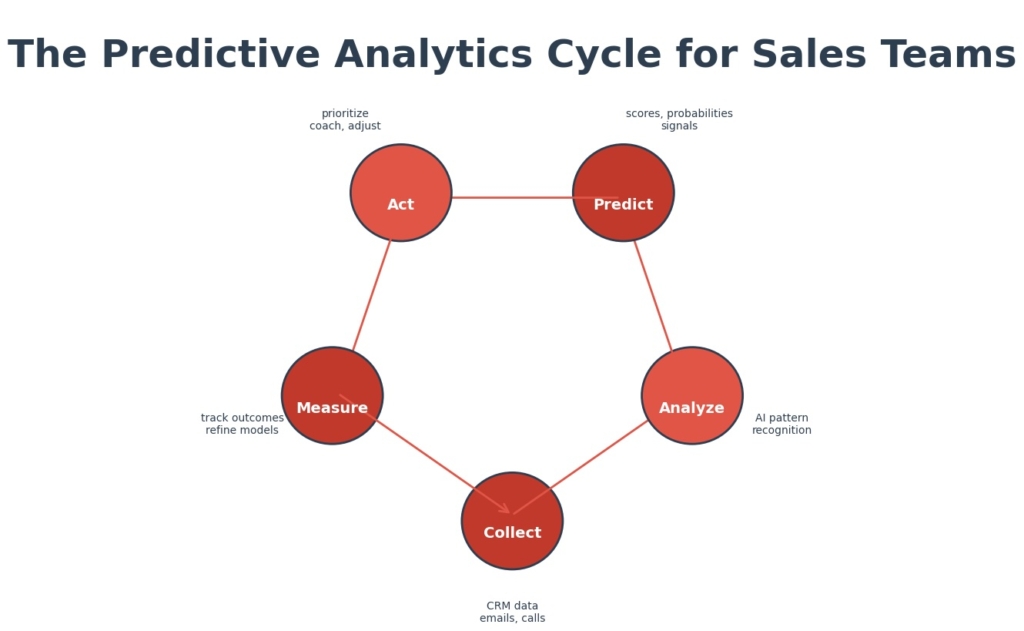
Predictive analytics uses historical data to forecast future outcomes. In sales, that means: given what we know about a deal, a prospect, or a sales rep, what’s likely to happen next? It’s pattern recognition at scale. It’s identifying correlations between variables and outcomes, then applying those patterns to new situations.
Example: Historical data shows that deals in the medical devices space with budget approval in month one close 68 percent of the time. Deals without budget approval close only 22 percent of the time. The deals that involve three stakeholders close 61 percent of the time. Deals involving five stakeholders close 73 percent. When a new deal comes in with those characteristics, predictive analytics, based on historical patterns, says this deal has a 70 percent probability of closing. That’s a prediction.
Where Predictive Analytics Adds Real Value
First, early warning. Predictive analytics can flag deals at risk before your rep realizes they’re in trouble. If a deal’s characteristics change (stakeholder count drops, timeline extends) in ways that historically correlate with lost deals, you want to know. You want your rep to know. That early signal creates time to intervene.
Second, opportunity prioritization. Your reps have limited time. Predictive analytics can help identify the highest-probability and highest-impact deals. The opportunities you should get your best reps? Which prospects should get the most follow-up? Which deals need immediate attention to move forward? Analytics answers those questions with data instead of guesswork.
Third, prospecting efficiency. Predictive models can identify which prospects most resemble your best customers. What characteristics do your highest-value customers share? Which industries are you most successful in? Which company sizes close fastest? Use those patterns to target prospects more likely to buy. Predictive prospecting reduces wasted effort on bad-fit prospects.
Fourth, rep and manager insight. Predictive analytics can show you which reps are strongest across different deal types, segments, and stages. It can highlight underperforming rep behaviors (insufficient discovery, too long in negotiations, not moving deals forward). It can also show what high performers do differently. That’s coaching material.
The Limitations You Need to Know
Predictive analytics uses patterns in historical data. If your market is changing, if the competitive landscape is shifting, if you’re entering new verticals, historical patterns are less predictive. It can also create bias. If you’ve historically struggled in certain industries, the model will predict continued struggle, even if you’ve made changes. Historical data reflects past bias.
It also doesn’t account for unmeasured variables. A rep who’s exceptional but whose excellence doesn’t show up in deal data. A prospect who’s been delayed by unexpected challenges, not because the deal is bad. Predictive analytics is data-driven, but data is never complete. Smart sales leaders use analytics alongside judgment.
How to Actually Implement Predictive Analytics
Step one: Get your data clean. Predictive analytics requires consistent deal tracking. Every deal needs the same attributes (stage, size, industry, stakeholder count, timeline, budget status). If data is inconsistent or missing, models struggle. Clean data is foundational.
Step two: Define what you want to predict. Deal close probability? Deal close timeline? Churn risk? Pipeline velocity? Each prediction requires its own model. Start with one clear prediction. Master it. Then add others.
Step three: Validate your model. Before using predictions to make decisions, test them. Did deals the model predicted would close actually close? What’s the actual accuracy? Be skeptical. Most models need tuning.
Step four: Integrate into workflow. The best predictive model does nothing if your reps don’t see it. It should surface in your CRM when a rep opens a deal. alert you to deals at risk. It should show in your forecasting process. Integration into daily work is where value happens.
The Real ROI
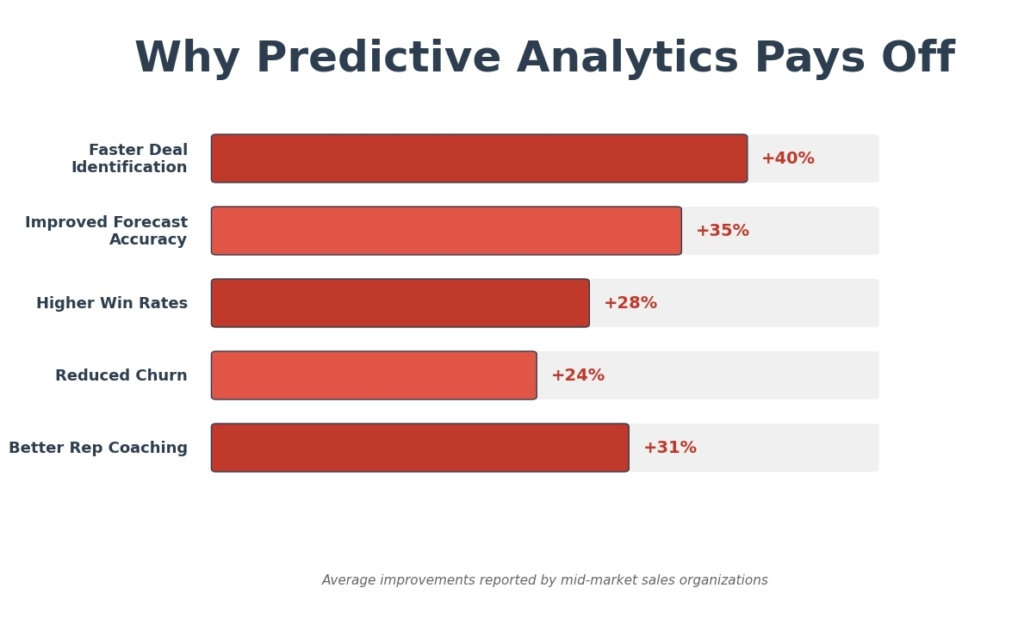
Predictive analytics doesn’t close deals. Sales reps close deals. But analytics can help reps close more deals, faster, with higher probability. That’s significant. Helping you better understand your sales engine. It can surface what high performers do differently and highlight process improvements. It can reduce time wasted on bad-fit prospects. In a typical organization, that translates to 10 to 20 percent improvement in close rates or pipeline velocity.
The real value is focus. Predictive analytics tells you where to focus effort for maximum impact. Choosing deals to fight for? Finding the correct reps to coach and how. Which prospects to prioritize? That clarity drives better decisions and better results.
Final Thought
Predictive analytics is not a crystal ball. It’s a powerful tool for understanding patterns in your sales data and applying those patterns to future situations. It works best when data is clean, when models are validated, when insights are integrated into daily workflow, and when it augments rather than replaces good sales leadership. Used well, it makes sales faster, more efficient, and more predictable. Pipeliner CRM’s predictive capabilities help teams move deals faster and forecast with confidence.



Comments